Introduction
Imagine being protected against the financial consequences of an accident for just ₹20 a year. That’s exactly what the PMSBY (Pradhan Mantri Suraksha Bima Yojana) offers.
Launched by the Government of India in 2015, PMSBY is designed to provide affordable accident insurance to workers and low-income Indians who may lack protection against the unexpected.
The scheme provides coverage for accidental death, permanent disability, and partial disability—all at a minimal annual premium.
The premium is automatically deducted from your linked bank or post office account each year, making renewal effortless.
Whether you’re hearing about PMSBY for the first time or want to know how to enroll, file a claim, or understand your benefits, this guide explains everything in plain English.
At a Glance
| Feature | Details |
|---|---|
| Scheme | Pradhan Mantri Suraksha Bima Yojana (PMSBY) |
| Type | Government-backed annual accident and disability insurance |
| Accidental Death Benefit | ₹2 lakh |
| Permanent Total Disability | ₹2 lakh |
| Partial Disability | ₹1 lakh |
| Annual Premium | ₹20 per year |
| Entry Age | 18–50 years |
| Renewal | Up to age 55, subject to annual renewal |
| Coverage Period | 1 June to 31 May |
| Premium Payment | Auto-debit from bank/post office account |
| Implemented Through | Participating banks/post offices with insurance partners |
What Is PMSBY?
The Pradhan Mantri Suraksha Bima Yojana (PMSBY) is a government-supported, one-year renewable accident insurance scheme designed to provide financial protection against the risks of accident-related injury and death.
Unlike general health insurance or life insurance, PMSBY focuses specifically on accidents. It covers death, permanent disability, and partial disability caused by accidents.
If an accident causes the covered person to die or become disabled while the policy is active, the nominee or claimant receives compensation—ranging from ₹1 lakh to ₹2 lakh, depending on the type of injury.
The scheme is available to any individual aged 18 to 50 years who maintains an eligible savings account with a participating bank or post office.
Why Was PMSBY Introduced?
Before PMSBY, many low-income workers—especially those in informal sectors—had no protection against accident-related disability or death.
Accidents can happen to anyone: a construction worker may fall, an auto-rickshaw driver may be in a collision, a farmer may sustain an injury during harvest. Without insurance, such accidents can wipe out a family’s financial security.
The Government introduced PMSBY to:
- Provide affordable accident insurance for workers and low-income families.
- Protect against loss of income due to accidental disability.
- Ensure financial support for families affected by accident-related death.
- Promote financial inclusion and social security.
- Complement other safety-net schemes, such as PMJJBY and Atal Pension Yojana (APY).
Latest PMSBY Updates (2026)
Here are the key points subscribers should know in 2026:
- Annual premium remains ₹20—one of the most affordable accident insurance premiums globally.
- Accidental death benefit remains ₹2 lakh.
- Permanent total disability benefit remains ₹2 lakh.
- The partial disability benefit remains at ₹1 lakh.
- Entry age remains 18 to 50 years.
- Coverage can continue up to age 55 provided the policy is renewed annually.
- The insurance period runs from 1 June to 31 May each year.
- New subscribers joining after the annual renewal period may pay a pro-rata premium depending on the month of enrollment.
- PMSBY has crossed 30 crore cumulative enrollments, with more than 13 lakh claims settled, reflecting the scheme’s widespread adoption and trust.
Key Features of PMSBY
Pure Accident Insurance
PMSBY is pure accident insurance. It does not cover illness, disease, or natural death—only accidents.
Three Levels of Protection
- Accidental Death: ₹2 lakh
- Permanent Total Disability: ₹2 lakh
- Partial Disability: ₹1 lakh
Automatic Renewal
Premium is deducted automatically every year. There is no paperwork required for renewal as long as your account remains active and has sufficient funds.
Simple Enrollment
Enrollment is available through your bank or post office. No medical examination is required in normal circumstances.
Affordable Premium
At just ₹20 per year, PMSBY is one of the world’s most affordable accident insurance schemes.
Accident Benefits Explained

Accidental Death Benefit (₹2 Lakh)
If the insured person dies as a direct result of an accident, the nominee receives ₹2 lakh.
Covered scenarios include:
- Road accidents (car, motorcycle, truck, auto-rickshaw, bicycle)
- Train accidents
- Aircraft accidents
- Workplace accidents
- Construction site accidents
- Fall from height
- Drowning
- Fire or burn injuries
- Electrocution
- Machinery-related accidents
- Animal attacks
- Natural disasters (earthquake, flood, landslide)
Important: Death must occur within 12 months of the accident. If death occurs after 12 months, the claim may not be payable under scheme rules.
Permanent Total Disability Benefit (₹2 Lakh)
If the insured person becomes permanently and totally disabled as a direct result of an accident, the claimant receives ₹2 lakh.
Permanent total disability means the person is unable to engage in any gainful activity and requires constant medical aid or supervision.
Examples include:
- Loss of both hands
- Loss of both feet
- Loss of sight in both eyes
- Complete paralysis
- Loss of hearing and speech
- Severe brain damage resulting in permanent incapacity
The disability must be permanent and certified by a registered medical practitioner.
Partial Disability Benefit (₹1 Lakh)
If the insured person suffers partial disability as a result of an accident, the claimant receives ₹1 lakh.
Partial disability means the loss or permanent damage to one limb or the permanent loss of sight in one eye.
Examples include:
- Loss of one hand
- Loss of one foot
- Loss of sight in one eye
- Loss of hearing in both ears
- Loss of fingers or toes (depending on number and extent)
The loss must be permanent and certified by a medical professional.
Eligibility for PMSBY
Who Can Join?
| Requirement | Details |
|---|---|
| Age | 18 to 50 years (completed age) |
| Account | Active savings account with participating bank or post office |
| Consent | Must authorize annual premium auto-debit |
| KYC | Savings account should comply with KYC requirements (Aadhaar commonly used) |
| Single Enrollment | One enrollment per person; multiple enrollments will result in forfeiture of duplicate premiums |
Quick Eligibility Checklist
You are eligible if you answer “Yes” to all of these questions:
- ✔ Are you between 18 and 50 years old?
- ✔ Do you have an individual savings bank or post office account?
- ✔ Is your account active and in good standing?
- ✔ Are you willing to allow annual auto-debit of the premium?
- ✔ Have you enrolled through only one account?
- ✔ Is your account compliant with KYC requirements?
If yes, you can join PMSBY.
Can You Continue After Age 50?
Yes.
You can join only up to age 50. But once enrolled, you can renew the policy each year until age 55, as long as your coverage has not lapsed and the premium remains paid.
| Age | Can Join? | Can Continue? |
|---|---|---|
| 25 | ✔ Yes | ✔ Yes |
| 40 | ✔ Yes | ✔ Yes |
| 50 | ✔ Yes | ✔ Yes |
| 52 | ❌ New enrollment not allowed | ✔ Renewal allowed |
| 56 | ❌ | ❌ Coverage ends |
Who Cannot Join PMSBY?
You cannot enroll if:
- You are below 18 years of age.
- You are above 50 years and have never enrolled before.
- You do not have an eligible savings bank or post office account.
- You do not consent to auto-debit of the premium.
- You attempt to enroll through multiple accounts.
- Your account is not compliant with KYC requirements.
Can NRIs Join PMSBY?
Yes.
Non-Resident Indians (NRIs) can enroll if they have an eligible savings account with a participating bank or post office in India and meet all other scheme conditions. Claims are payable to the nominee in accordance with scheme rules.
Premium and Coverage
Annual Premium
The annual premium is ₹20.
This is one of the most affordable accident insurance premiums available globally.
For less than ₹0.05 per day, the scheme provides:
- ₹2 lakh accidental death coverage
- ₹2 lakh permanent disability coverage
- ₹1 lakh partial disability coverage
- Coverage for accidents due to any cause
What If You Join Mid-Year?
If you enroll for the first time after the policy year has started (1 June), you may pay a pro-rata premium.
| Month of First Enrollment | Premium Payable |
|---|---|
| June–August | ₹20 |
| September–November | ₹15 |
| December–February | ₹10 |
| March–May | ₹5 |
At the next renewal, the full annual premium of ₹20 becomes payable.
Coverage Period
PMSBY follows a fixed insurance year.
- Policy Starts: 1 June
- Policy Ends: 31 May (next year)
The policy must be renewed each year to maintain continuous coverage.
How to Enroll in PMSBY
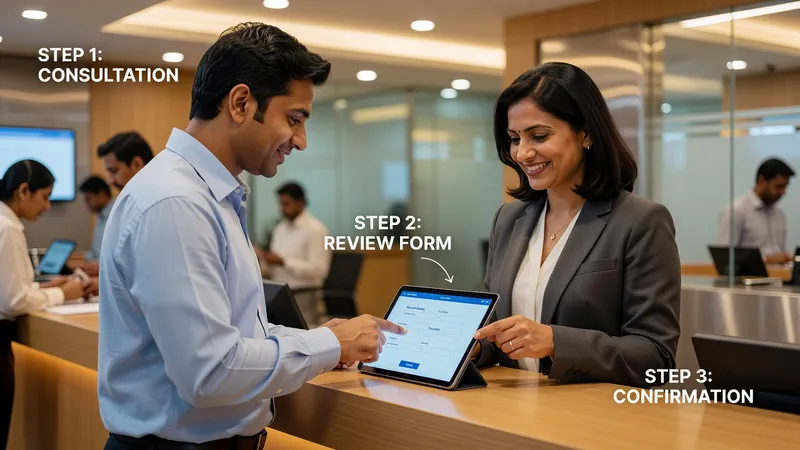
Enrollment is simple and can be completed through multiple channels.
Method 1: Through Your Bank Branch (Most Common)
Step 1: Visit the branch where you maintain your savings account.
Step 2: Ask for the PMSBY Enrollment (Consent-cum-Declaration) Form.
Step 3: Fill in:
- Your full name
- Date of birth
- Savings account number
- Mobile number
- Aadhaar (where applicable as KYC)
- Nominee details (name, relationship, contact)
Step 4: Sign the auto-debit mandate authorizing the bank to deduct the annual premium from your account.
Step 5: Submit the completed form and get an acknowledgment.
Your bank will forward the details to the insurer, and your insurance cover will start as per scheme rules.
Method 2: Through Internet Banking
Many banks allow customers to enroll online.
Typical process:
- Log in to your Internet Banking portal.
- Look for the section titled “Government Insurance Schemes” or “Social Security Schemes”.
- Select PMSBY.
- Verify your personal details.
- Add or confirm nominee details.
- Accept the declaration.
- Confirm the auto-debit mandate.
Some banks send an SMS confirming successful enrollment.
Note: Menu names vary from one bank to another. If you cannot find it, contact your bank’s customer service.
Method 3: Through Mobile Banking
Several banks offer PMSBY enrollment through their mobile apps.
Typical steps:
- Open your banking app.
- Navigate to Government Schemes, Insurance, or Social Security.
- Choose PMSBY.
- Confirm your personal details.
- Accept the declaration.
- Authorize auto-debit.
Method 4: Through India Post
If you maintain an eligible Post Office Savings Account, you can enroll at a participating post office. The process is similar to that followed by banks.
Documents Required
One advantage of PMSBY is that documentation is minimal.
| Document | Required? | Notes |
|---|---|---|
| Active savings account | ✔ Yes | Bank or post office |
| Aadhaar or KYC document | ✔ Usually | Linked to your account |
| Mobile number | ✔ Recommended | For notifications |
| Nominee details | ✔ Yes | Name, relationship, contact |
| Auto-debit consent | ✔ Mandatory | Required for enrollment |
| Medical examination | ❌ No | Not normally required |
Is Aadhaar Mandatory?
Aadhaar is generally used as the primary KYC document. However, enrollment depends on your bank’s KYC compliance requirements, not on a separate Aadhaar submission for PMSBY.
Choosing and Updating Your Nominee
Who Can Be Your Nominee?
You can nominate:
- Spouse
- Son or daughter
- Mother or father
- Brother or sister
- Any other legally eligible person
Choose someone you trust to handle the claim if needed.
Can You Change Your Nominee?
Yes.
To update your nominee:
- Visit your bank or post office.
- Request the nomination modification form.
- Submit the revised nominee details.
- Keep a copy of the acknowledgment.
Many banks also allow nomination updates through their mobile app or Internet Banking portal.
Covered Accidents
PMSBY covers accidental injuries and death caused by external, unexpected events.
Examples of Covered Accidents
- Road accidents (any vehicle)
- Train or railway accidents
- Air accidents
- Motorcycle or bicycle accidents
- Workplace accidents
- Fall from height
- Drowning or water-related accidents
- Fire or burn injuries
- Electrocution
- Animal attacks
- Machinery-related accidents
- Natural disasters (earthquake, landslide, flood, cyclone)
- Poisoning (accidental)
Important Timing Rule
Death or disability must occur within 12 months of the accident. If the person dies or becomes disabled more than 12 months after the accident, the claim may not be payable.
What Is NOT Covered
PMSBY does not cover:
- Death or disability caused by illness or disease.
- Death or disability caused by medical conditions (heart attack, stroke, cancer) even if triggered during an accident.
- Self-inflicted injuries or suicide.
- Disability resulting from medical treatment rather than the accident itself.
- Death or disability occurring more than 12 months after the accident.
- Loss of income or temporary disability.
- Hospitalization or medical treatment costs.
- Death or disability caused by involvement in criminal activities or unlawful acts.
- Death or disability while under the influence of drugs or alcohol (in some cases, as per policy terms).
Key Point: PMSBY is pure accident insurance. It does not cover illness-related disability or death, temporary disability, or treatment costs.
PMSBY Claim Process: Step-by-Step Guide
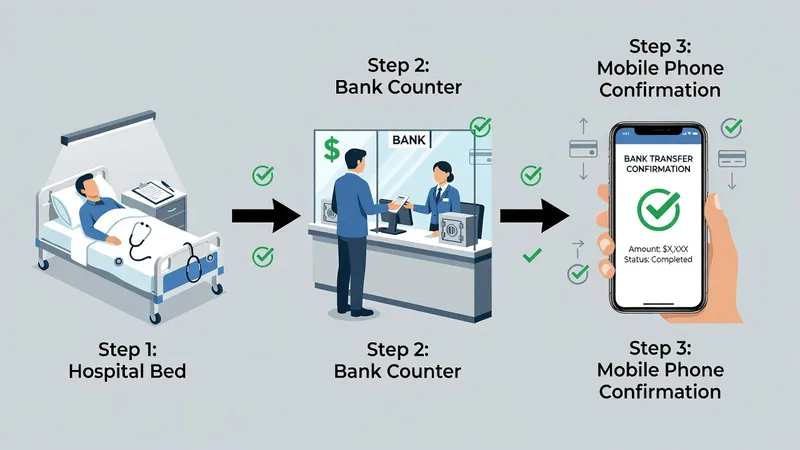
If the insured person meets with an accident resulting in death or disability, the nominee (or legal heir) can file a claim to receive the benefit amount.
The Claim Flow
- An accident occurs, and the person is injured or dies.
- Nominee or legal heir informs the bank or post office.
- Obtain and complete the PMSBY Claim-cum-Discharge Form.
- Gather all required supporting documents.
- Submit documents to the bank or post office.
- The bank verifies the claim details.
- The insurer reviews the claim and medical reports.
- The claim is approved or denied.
- Benefit amount is credited to the nominee’s bank account.
Step 1: Inform the Bank or Post Office
As soon as possible after the accident, inform the branch where the PMSBY policy was enrolled.
The staff will:
- Verify that the person was covered under PMSBY.
- Provide the required claim forms.
- Explain the documentation needed.
- Guide you through the process.
Step 2: Obtain the Claim Form
The required form is called the Claim-cum-Discharge Form.
It can be obtained from:
- Your bank branch
- The participating insurance company
- The official Jan Suraksha portal (online download)
- India Post office (if enrolled through post office)
Step 3: Complete the Claim Form
The claimant should fill in:
- Name and details of the insured person
- PMSBY enrollment details
- Bank account number and IFSC code
- Date of accident
- Description and cause of accident
- Type of claim (death, permanent disability, partial disability)
- Nominee or claimant name and address
- Mobile number and email
- Bank account details for receiving the claim amount
Double-check that all information matches the bank’s records before submitting.
Step 4: Attach Required Documents
| Document | Why It’s Needed |
|---|---|
| Completed Claim-cum-Discharge Form | Official claim application |
| Death Certificate (if death claim) | Proof of death and date |
| Medical Report or Certificate (if disability) | Proof of disability caused by accident |
| Accident Report (FIR if applicable) | Official record of the accident |
| Police Report or hospital records | Additional proof of accident circumstances |
| Copy of passbook or account statement | Verification of account details |
| Nominee’s identity proof (Aadhaar, PAN, voter ID) | Identity verification |
| Nominee’s bank account details | For claim payment |
| Any additional documents requested | Insurer may ask for more information |
Step 5: Bank Verification
The bank or post office:
- Checks that the subscriber was enrolled and covered.
- Verifies that the premium had been deducted every year.
- Confirms the nominee details against records.
- Reviews the submitted documents.
- Forwards the complete claim to the insurer if everything is in order.
Step 6: Insurance Company Review
The insurer verifies:
- Policy status and coverage dates.
- Eligibility of the claimant.
- Authenticity of documents.
- Cause of death or disability (accident confirmation).
- Compliance with scheme rules.
If the insurer needs clarification, they may ask the bank for additional information.
Step 7: Claim Settlement
Once the claim is approved, the insurer credits the benefit amount directly to the nominee’s bank account.
Payment is made through the banking system—not in cash.
How Long Does Settlement Take?
Timeframe depends on:
- Whether all documents are complete and accurate.
- How quickly the bank verifies the claim.
- How quickly the insurer receives and processes the documents.
- Whether medical opinions or additional clarification are needed.
Straightforward claims with complete documentation are generally processed within 2–4 weeks. Complex claims requiring medical review or additional investigation may take longer.
There is no single statutory timeline for all claims under PMSBY, so a complete application helps avoid unnecessary delays.
Is There a Time Limit for Filing a Claim?
The claimant should inform the bank and submit the claim as soon as reasonably possible after the accident or death.
Although delays may be accepted in genuine circumstances, prolonged waiting can make document verification and claim investigation more difficult.
Best practice: Start the claim process within a few weeks of the accident, once the death certificate (if applicable) is available.
Required Claim Documents (Detailed)
For Accidental Death Claims
- Original death certificate issued by municipal authority or hospital.
- Completed PMSBY Claim-cum-Discharge Form.
- Accident report (police FIR if applicable).
- Medical cause of death certificate.
- Nominee’s identity proof and bank account details.
- Copy of the deceased’s bank passbook.
- Any other supporting evidence (hospital discharge summary, police report details).
For Permanent Total Disability Claims
- Medical certificate from a registered doctor confirming permanent total disability.
- Detailed medical report describing the nature and extent of disability.
- Medical test reports (X-rays, CT scans, etc., if applicable).
- Accident report or details.
- Claimant’s identity proof and bank account details.
- Copy of the insured person’s bank passbook.
For Partial Disability Claims
- Medical certificate from a registered doctor confirming partial disability.
- Medical examination report.
- Proof of the loss (e.g., loss of one limb, one eye).
- Accident report or details.
- Claimant’s identity proof and bank account details.
- Copy of the insured person’s bank passbook.
Claim Settlement Timeline
The typical timeline for claim settlement is:
| Stage | Timeframe |
|---|---|
| Claim submission to bank | Immediate (submit as soon as possible) |
| Bank verification | 7–14 days |
| Submission to insurer | Within 2–3 days of verification |
| Insurer review and processing | 10–20 days (may extend if medical opinion needed) |
| Claim approval or denial | Within 30–40 days (for straightforward cases) |
| Payment to nominee account | 3–5 working days after approval |
| Total (best case) | 30–45 days |
| Total (complex cases) | 60–90 days or more |
Note: Delays may occur if documents are incomplete, medical clarification is required, or the insurer needs to investigate the circumstances of the accident.
Common Reasons for Claim Delays or Rejection
Claims may be delayed or rejected if:
- The policy had lapsed because the premium was not successfully deducted.
- The accident was not covered under the scheme (e.g., illness-related death).
- Death or disability occurred more than 12 months after the accident.
- The subscriber was not eligible under scheme rules.
- The subscriber had enrolled through multiple accounts.
- The cause of death or disability cannot be confirmed as accident-related.
- Required documents are missing or inconsistent.
- Medical evidence does not support the claim.
- Nominee details do not match the bank’s records.
- The claim form is incomplete or contains false information.
Renewal Rules
Automatic Renewal
PMSBY is renewed automatically every year if:
- Your bank account remains active.
- You continue to meet the scheme conditions.
- Sufficient balance is available for the annual premium deduction.
- Your age does not exceed 55 years.
Policy Year
The policy runs from June 1 to May 31 each year. Renewal typically occurs around the start of the new policy year (early June).
What Happens If the Premium Is Not Deducted?
If the premium cannot be debited—for example, because your account has insufficient funds or has been closed—the insurance cover may terminate.
If this happens:
- You have no insurance protection during the lapse period.
- You may need to rejoin the scheme by submitting a fresh declaration and paying the applicable premium.
Can You Rejoin After a Policy Lapses?
Yes.
Subscribers who discontinue PMSBY can generally rejoin later, provided they are otherwise eligible and comply with the prevailing scheme requirements.
However, you may need to:
- Submit a fresh declaration form.
- Authorize a new auto-debit mandate.
- Comply with any applicable waiting periods.
How to Reactivate the Scheme
If your PMSBY coverage has lapsed, you can reactivate it.
Step 1: Contact Your Bank
Visit your bank branch or contact customer service and ask to rejoin PMSBY.
Step 2: Check Eligibility
Confirm that you still meet the eligibility criteria:
- Age between 18 and 55 years.
- Active savings account.
- No multiple enrollments.
Step 3: Complete the Enrollment Form
Fill in a new PMSBY Enrollment Form and authorize auto-debit.
Step 4: Verify and Submit
The bank will verify your details and reactivate the scheme.
Waiting Period for Reactivation
When you rejoin after a lapse, there may be a waiting period before certain benefits are covered. Check with your bank about any applicable waiting period rules.
Practical Tips to Avoid Problems
- ✔ Keep at least ₹50 in your account during the renewal period to avoid a failed premium debit.
- ✔ Save your enrollment acknowledgment and SMS confirmation.
- ✔ Review your nominee details after marriage, birth of a child, or other major life changes.
- ✔ Check your bank statement every year to confirm that the premium has been deducted.
- ✔ Update your mobile number with your bank so you receive SMS alerts about premium deduction.
- ✔ Keep all accident-related documents (police reports, hospital records, medical certificates) safe for three years or more.
FAQs
1. What is PMSBY?
PMSBY is a government-backed annual renewable accident insurance scheme that provides financial protection against accidental death and disability. It pays ₹2 lakh for death or permanent disability, and ₹1 lakh for partial disability.
2. What is the annual premium?
The annual premium is ₹20.
3. What benefits does PMSBY provide?
- ₹2 lakh for accidental death
- ₹2 lakh for permanent total disability
- ₹1 lakh for partial disability
4. Who can join PMSBY?
Individuals aged 18 to 50 years with an active savings bank or post office account.
5. Can I continue after turning 50?
Yes. If you enrolled before age 51 and continue to renew, you may remain covered until age 55.
6. Is PMSBY the same as PMJJBY?
No. PMSBY covers accidents only. PMJJBY (life insurance) covers death from any cause. PMSBY premium is ₹20; PMJJBY premium is ₹436. Both schemes can be held together.
7. Does PMSBY cover illness-related death?
No. PMSBY covers only accident-related death. Death from illness, heart attack, stroke, or medical conditions is not covered.
8. What counts as an accident under PMSBY?
Any sudden, unexpected, external event resulting in injury. Examples: road accidents, falls, electrocution, drowning, fire, machinery accidents.
9. How long do I have to file a claim after an accident?
File the claim as soon as possible after the accident. Aim to submit within a few weeks. Prolonged delays can make verification difficult.
10. What if the person dies more than 12 months after the accident?
If death or disability occurs more than 12 months after the accident, the claim may not be payable under scheme rules.
11. How long does it take to settle a claim?
Straightforward claims typically settle within 30–45 days. Complex claims may take 60–90 days or longer, depending on the need for medical investigation.
12. Can NRIs join PMSBY?
Yes, if they have an eligible savings account with a participating bank in India.
13. What happens if I enroll after June?
You pay a pro-rata premium based on the month of enrollment. At renewal, you pay the full ₹20.
14. Can I have PMSBY and PMJJBY together?
Yes. You can hold both schemes simultaneously for combined protection. PMSBY covers accidents; PMJJBY covers death from any cause.
15. What if I miss a premium payment?
If the bank cannot debit the premium due to insufficient funds, your coverage lapses. You can rejoin later by submitting a new form.
Common Claim Mistakes to Avoid
Mistake 1: Delay in Filing the Claim
Don’t wait months to file. Submit the claim within a few weeks of the accident while documents and memories are fresh.
Mistake 2: Incomplete Documentation
Gather all required documents before visiting the bank. Missing documents cause delays.
Mistake 3: Incorrect Nominee Details
Ensure that the nominee’s name, address, and bank account details match the original enrollment. Mismatches cause rejections.
Mistake 4: Assuming All Injuries Are Covered
PMSBY covers only accident-related injuries. Illness-related disability is not covered.
Mistake 5: Not Obtaining Medical Certification
For disability claims, obtain a proper medical certificate from a registered doctor confirming the nature and permanence of the disability.
Mistake 6: Missing Accident Documentation
Keep police reports, hospital records, and medical certificates. These are essential for claim verification.
Mistake 7: Letting Coverage Lapse
If the premium is not deducted for one year, coverage ends. Rejoin immediately if you want protection.
PMSBY vs Private Accident Insurance: Key Differences
| Feature | PMSBY | Private Accident Insurance |
|---|---|---|
| Premium | ₹20/year | ₹500–₹3,000+/year |
| Entry age | 18–50 | Varies (often 18–65) |
| Accidental death | ₹2 lakh | ₹5–₹50 lakh (varies) |
| Partial disability | ₹1 lakh | ₹0.5–₹10 lakh (varies) |
| Medical exam | Not required | May be required |
| Processing | Simple | More formal |
| Waiting period | None for accidents | Varies |
| Administrative | Through bank | Direct with insurer |
| Target group | Low-income Indians | All income groups |
Verdict: PMSBY is ideal for basic, affordable accident protection. Private accident insurance offers higher coverage and more customization but at a higher cost.
PMSBY vs PMJJBY: Which Is Right for You?
| Feature | PMSBY | PMJJBY |
|---|---|---|
| Coverage type | Accident insurance | Life insurance |
| Death benefit | ₹2 lakh (accident only) | ₹2 lakh (any cause) |
| Disability benefit | ₹1–₹2 lakh | None |
| Premium | ₹20/year | ₹436/year |
| What’s covered | Accident-related death/disability | Death from any cause |
| Hospital costs | Not covered | Not covered |
| Income support | No | No |
Best approach: Enroll in both schemes. Together, they cost only ₹456/year and provide comprehensive protection against both accidents and natural death.
Who Should Buy PMSBY?
PMSBY is especially suitable for:
- Workers in construction, manufacturing, or hazardous occupations.
- Auto-rickshaw drivers and taxi drivers.
- Truck drivers and transport workers.
- Farmers and agricultural workers.
- Motorcycle and bicycle riders.
- Young adults with limited income.
- Self-employed individuals without accident insurance.
- Anyone seeking affordable accident protection.
- Individuals who combine PMSBY with PMJJBY for comprehensive coverage.
Final Verdict
PMSBY is one of India’s most affordable accident insurance schemes. At just ₹20 per year, it provides essential protection against the financial consequences of accidental death and disability.
For workers in hazardous occupations, daily-wage earners, and anyone at higher risk of accidents, PMSBY is a sensible investment. The premium is so low that there is little reason not to enroll if you are eligible.
However, remember that PMSBY covers accidents only. It does not cover illness-related death or disability. For comprehensive protection, combine PMSBY with PMJJBY (life insurance) and consider a health insurance policy.
If you meet the eligibility criteria and are not yet enrolled, PMSBY is a simple and cost-effective way to strengthen your family’s financial security against accidental risks.
FAQs
- What is PMSBY and how does it work? PMSBY is a government-backed annual renewable accident insurance scheme that provides financial protection against accidental death and permanent or partial disability. The annual premium is ₹20, and benefits range from ₹1 lakh to ₹2 lakh depending on the type of injury.
- Who is eligible to enroll in PMSBY? Any individual aged 18 to 50 years with an active savings account (bank or post office) who consents to auto-debit of the premium.
- How much does PMSBY cost? The annual premium is ₹20. If you enroll mid-year, you may pay a pro-rata premium.
- What are the benefit amounts under PMSBY? Accidental death: ₹2 lakh. Permanent total disability: ₹2 lakh. Partial disability: ₹1 lakh.
- Is medical examination required for PMSBY enrollment? No, medical examination is not normally required.
- How is the premium paid? The premium is deducted automatically from your linked savings account every year. No manual payment is needed.
- Can I continue PMSBY after age 50? Yes, if you enrolled before age 51. You can renew until age 55, provided the policy remains active and premiums are paid.
- Does PMSBY cover illness-related death? No. PMSBY covers accident-related death and disability only. Death from illness, disease, or natural causes is not covered.
- How long does it take to settle a PMSBY claim? Straightforward claims typically settle within 30–45 days. Complex cases may take 60–90 days or longer.
- What is the difference between PMSBY and PMJJBY? PMSBY (₹20/year) covers accident-related death and disability only. PMJJBY (₹436/year) covers death from any cause. Both can be held simultaneously.
Related Articles Recommendations
- PMJJBY (Pradhan Mantri Jeevan Jyoti Bima Yojana): Complete Guide — Life insurance counterpart; covers death from any cause for ₹436/year.
- Atal Pension Yojana (APY): Eligibility, Benefits & Contribution Chart — Retirement income security for low-income workers.
- PMJDY (Pradhan Mantri Jan Dhan Yojana): Complete Guide — Basic savings account requirements for PMSBY enrollment.
- Government Insurance Schemes in India: Which One Is Right for You? — Comprehensive comparison table of PMSBY, PMJJBY, health insurance, and pension schemes.
- Ayushman Bharat (PMJAY): Complete Guide 2026 — Health insurance complement to PMSBY (covers medical treatment, not accidents only).
Official Government Sources Referenced
| Organization | Official Website / Portal |
|---|---|
| Department of Financial Services (DFS), Ministry of Finance, Government of India | Department of Financial Services |
| Jan Suraksha Portal (Official) | Jan Suraksha Portal |
| Ministry of Labour & Employment, Government of India | Ministry of Labour & Employment |
| Insurance Regulatory and Development Authority of India (IRDAI) | IRDAI |
| Life Insurance Corporation of India (LIC) | Life Insurance Corporation of India (LIC) |
| State Bank of India (SBI) | State Bank of India |
| India Post | India Post PMJJBY/PMSBY Pages |
Last Verified Dateline
Last Reviewed: July 2026
Next Scheduled Review: January 2027
This guide reflects the scheme rules and benefits as per the Department of Financial Services, Government of India, as of July 2026. Scheme terms, premium amounts, and benefit limits may change. Please verify with your bank or the official Jan Suraksha portal for the most current information before enrollment.
Disclaimer
This guide is for informational purposes only and does not constitute financial or legal advice. While we have endeavored to provide accurate and up-to-date information based on official government sources, scheme rules and benefits may change. For the most current and binding information, please consult the Department of Financial Services, your participating bank, or the Jan Suraksha portal. The author and Haqdaar are not responsible for any errors, omissions, or decisions made based on this guide.