Who is eligible for PM Awas Yojana Gramin?
Rural families living in a kutcha or severely damaged house, without a pucca house anywhere in India, who are listed in the SECC 2011 database or the newer Awaas+ 2024 survey, qualify. Since the 2024 relaxation, owning a two-wheeler or a fridge no longer disqualifies you, and the income limit has been raised to ₹15,000 a month.
What is PMAY-Gramin?
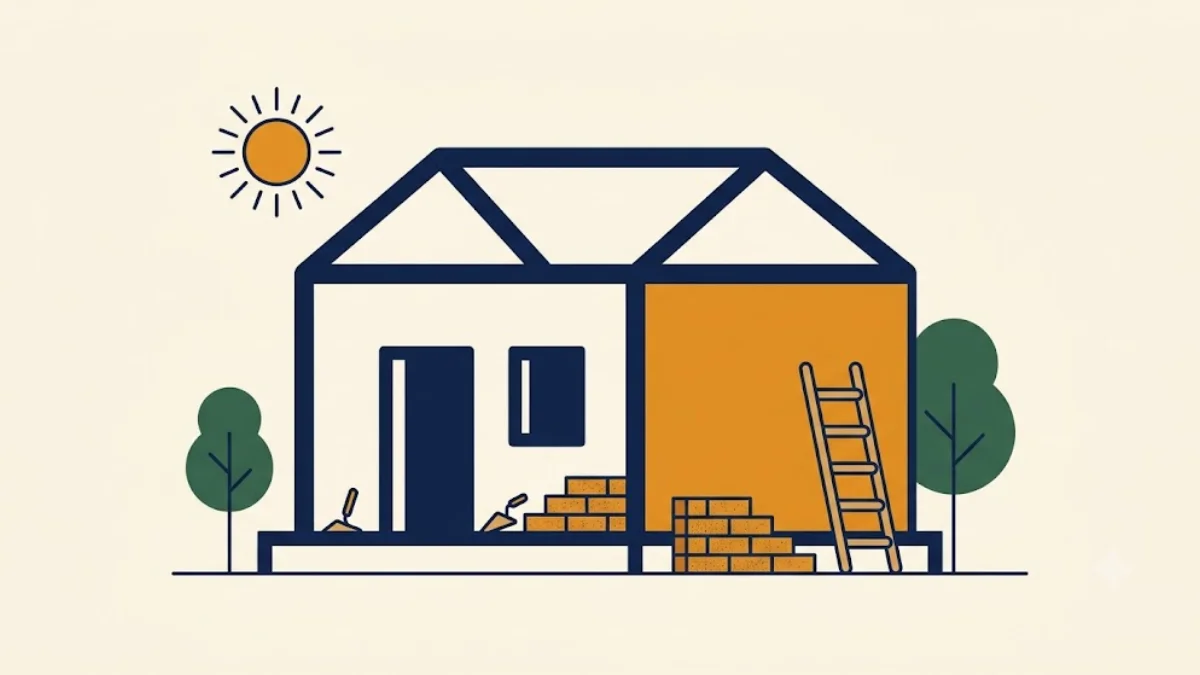
PM Awas Yojana – Gramin (PMAY-G) is the rural counterpart to PMAY-Urban, giving direct financial assistance to build a pucca house with a toilet and basic amenities. It replaced the earlier Indira Awas Yojana (IAY) on 1 April 2016, roughly doubling the assistance amount.
The scheme has a stated target of 4.95 crore houses. By August 2025, over 2.82 crore had already been completed out of 4.12 crore sanctioned — a large, genuinely active program, not a symbolic one.
Key details at a glance
| Detail | Amount / Criteria |
|---|---|
| Assistance — plain areas | ₹1.20 lakh |
| Assistance — hilly/difficult/LWE areas | ₹1.30 lakh |
| Additional MGNREGA wages | 90–95 days unskilled labour |
| Toilet construction support | ₹12,000 (Swachh Bharat Mission) |
| Typical house size | Around 25 sq. metres |
| Monthly income limit (post-2024 relaxation) | ₹15,000 |
| Land ownership allowed | Up to 2.5 acres irrigated / 5 acres un-irrigated |
| Official portal | pmayg.dord.gov.in |
Who qualifies
- Rural households living in a kutcha house, a severely damaged house, or with no house at all.
- Neither you nor any of your family members own a pucca house anywhere in India.
- Your family is listed in the SECC 2011 database, or has been added through the newer Awaas+ 2024 survey for households missed the first time.
- Priority goes to landless laborers, SC/ST households, and families with a disabled member and no able-bodied adult earner.
What changed in the 2024 relaxation — worth knowing if you were told “no” before
Many families were excluded in earlier years by rules that, frankly, no longer make sense for identifying genuine need. The Awaas+ 2024 survey relaxed several of them:
- Owning a two-wheeler, a refrigerator, or a landline phone no longer disqualifies you.
- The monthly income ceiling was raised to ₹15,000.
- Families with up to 2.5 acres of irrigated land or 5 acres of un-irrigated land can now qualify — previously, owning any meaningful landholding was an automatic exclusion.
If you were turned down years ago under the old rules, it’s genuinely worth checking again — you may qualify now even if you didn’t before.
Who’s excluded
- Anyone who already owns a pucca house anywhere in India.
- Households not captured in either the SECC 2011 database or the Awaas+ 2024 survey — being missed by both means you’re not currently in the system, though future survey rounds may add you.
- Families who have already received central or state housing assistance for the same purpose.
What you get
- ₹1.20 lakh (plain areas) or ₹1.30 lakh (hilly, difficult, and LWE-affected areas), released in installments as construction progresses, verified via geo-tagged photos at foundation, lintel, and completion stages.
- 90–95 days of MGNREGA unskilled labor wages, on top of the housing grant — this alone can meaningfully offset the labor cost of building the house yourself.
- ₹12,000 toward toilet construction through the Swachh Bharat Mission, layered onto the same application.
How to check your status and apply
- If you believe you qualify but aren’t yet listed, contact your Gram Panchayat to be included in the ongoing Awaas+ survey, or self-survey directly using the AwaasPlus app with Aadhaar-based face authentication.
- To check an existing beneficiary status: visit pmayg.dord.gov.in → Stakeholders → IAY/PMAYG Beneficiary → enter your registration number.
- Complete Aadhaar-based e-KYC and ensure your bank account is Aadhaar-linked — installments are released via Direct Benefit Transfer.
- Upload geo-tagged construction photos at each stage to trigger the next installment.
Common mistakes that delay or block assistance
- Assuming old exclusion rules still apply. If you were excluded years ago for owning a two-wheeler or having a small landholding, those specific rules have changed — don’t assume you’re still ineligible without checking again under the current criteria.
- Missing the Gram Sabha verification meeting. Selected beneficiaries are verified at the Gram Sabha level; missing this step can stall your application even after you’ve been provisionally selected.
- Not completing e-KYC or Aadhaar-bank linkage. Installments won’t release without this, regardless of how far along construction is.
- Skipping geo-tagged photo uploads. Each installment is tied to a specific construction milestone with photo verification — building ahead of schedule without documenting each stage can actually delay your next payment rather than speed it up.
PM Awas Yojana Gramin Eligibility 2026: FAQs
Is PMAY-Gramin the same as Indira Awas Yojana (IAY)?
No, though it replaced it. IAY was restructured into PMAY-Gramin on 1 April 2016, with roughly double the earlier assistance amount and additional features such as Aadhaar linkage and geo-tagged monitoring.
What if my name isn’t in either the SECC 2011 list or the current Awaas+ survey?
Contact your Gram Panchayat to request inclusion in the next survey round, or use the AwaasPlus app’s self-survey feature if available in your area.
Can a family with some agricultural land still qualify?
Yes, since the 2024 relaxation — up to 2.5 acres of irrigated land or 5 acres of un-irrigated land no longer disqualifies a household.
How long does it take to receive the full amount?
Assistance is released in installments tied to construction progress (foundation, lintel, completion), so the total timeline depends on how quickly you build and document each stage, rather than on a fixed disbursement schedule.
Do landless families qualify?
Yes — landless laborer households are specifically prioritized, and over 2.68 lakh landless families have been approved for housing under the scheme so far.
Is there a fee to apply?
No. Registration, survey inclusion, and the entire application process are free through official channels — never pay anyone claiming to speed up or guarantee your selection.
What’s the difference between this and PMAY-Urban?
PMAY-Urban serves city/town residents through four verticals (loan subsidy, direct construction, subsidized housing, or rental housing); PMAY-Gramin provides rural households with a single direct construction grant, with MGNREGA and sanitation support layered on top.
Related schemes
If you’re in an urban area instead, see our guide to PM Awas Yojana Urban 2.0. For your full range of scheme eligibility, use the Haqdaar eligibility checker.
Last verified: July 2026. Information compiled from the official PMAY-Gramin portal (pmayg.dord.gov.in) and the Ministry of Rural Development. This is independent informational content, not affiliated with the Government of India. Eligibility rules can change. Always verify current details on the official portal before applying.