
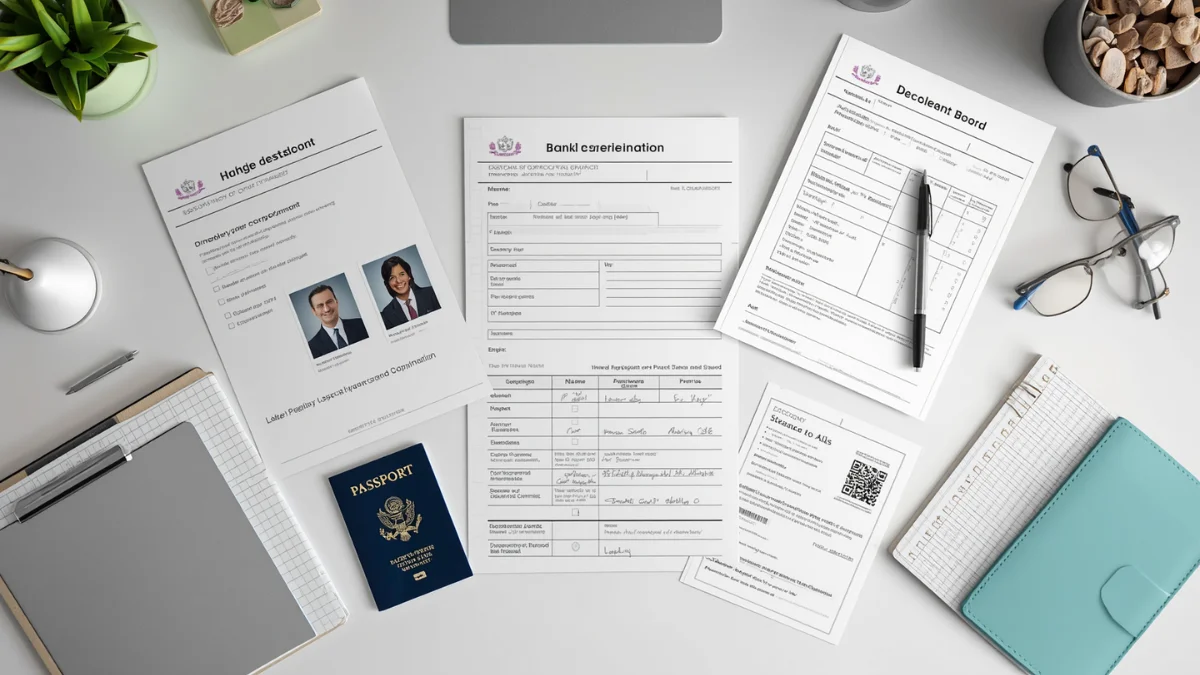
What documents are commonly needed for government schemes?
Most schemes require some combination of Aadhaar card, address proof, a bank passbook or account details linked to Aadhaar, and category-specific documents such as income certificates, land records, or disability certificates, depending on the scheme. Having these ready before a window opens saves real time during a fast-moving application period.
Why preparing early actually matters
Application windows — especially seasonal ones like PMFBY’s Kharif/Rabi cycles, or survey-based ones like PMAY’s Awaas+ rounds — often move faster than people expect, and slow document-gathering is one of the most common reasons people miss deadlines that were otherwise entirely within reach. Having a personal document folder, physical or digital, ready turns an application from a scramble into something you can complete in minutes.
Identity documents
- Aadhaar card — required for nearly every central scheme on this site, since most benefits are delivered via Aadhaar-linked Direct Benefit Transfer.
- PAN card — required for some schemes, particularly those involving loans (Mudra, PMEGP, Stand-Up India) or larger financial transactions.
- Voter ID — sometimes accepted as a secondary identity document where Aadhaar alone isn’t sufficient for a specific verification step.
Keep both a physical copy and a clear photo or digital scan — many portals require a document upload, not just an in-person check.
Address and residence proof
- Ration card — widely used both as an address proof and, for BPL/AAY category cards specifically, as an eligibility document for several schemes covered on this site (Ayushman Bharat, Ujjwala, pension schemes).
- Domicile/residence certificate — sometimes required for state-administered components of central schemes, or for state-specific top-up schemes.
- Recent utility bill or bank statement showing your address — accepted as a secondary proof by some portals if your Aadhaar address is outdated.
Bank and DBT details
- Bank passbook or a canceled cheque showing your account number and IFSC code — needed to set up or confirm Direct Benefit Transfer for almost every scheme on this site.
- Confirmation that your Aadhaar is “seeded” with your bank account via NPCI — not just linked. This distinction genuinely matters (see our PM Kisan guide for a full explanation) and is one of the most common, avoidable reasons payments fail to arrive even for approved applicants.
- A recent bank statement, useful if a scheme asks you to demonstrate account activity or verify the account is active.
Income and social-category certificates, where applicable
- Income certificate — required for schemes with income-based eligibility bands (PMAY’s EWS/LIG/MIG categories, several National Scholarship Portal schemes).
- Caste certificate (SC/ST/OBC) — required for category-specific benefits under several schemes, including Stand-Up India’s SC/ST provision and certain scholarship categories.
- BPL/EWS/AAY card, where scheme eligibility specifically depends on this status (Ayushman Bharat for those below age 70, several pension schemes, PM Ujjwala).
These certificates are typically issued by your local Tehsildar, Revenue Department, or equivalent local authority — it’s worth applying for them well in advance if you don’t already have current ones, since they can take time to issue and often require periodic renewal.
Land records, for farmer and housing schemes
- Khatauni/khasra land records — required for PM Kisan, PM Fasal Bima Yojana, and the PMAY-Gramin BLC vertical where you’re building on your own land.
- Updated ownership records reflecting your current name — a mismatch between an old land record and your current legal name (common after inheritance or marriage) is a frequent, avoidable cause of application rejection. Correct this at the source (your local land records office) rather than trying to work around it during an application.
Disability, pension, student, or employment records, where applicable
- Disability certificate from a government medical board — required for IGNDPS and disability-specific provisions in other schemes; note that state-level disability pension schemes sometimes accept a lower disability percentage threshold than the central IGNDPS scheme, so check both.
- Widow certificate or spouse’s death certificate — required for IGNWPS.
- Current student enrollment proof — required for applications to the National Scholarship Portal.
- Vending certificate or letter of recommendation from your local urban body — required specifically for PM SVANidhi, if you’re a street vendor.
How to store these documents safely
- Keep physical originals in one place, ideally somewhere fire- and water-resistant if possible — a simple folder or plastic sleeve is far better than loose papers.
- Keep digital scans or clear photos backed up — in cloud storage, on a second device, or both — so that a lost or damaged physical document doesn’t mean starting over.
- Label digital files clearly (“Aadhaar_2026,” “LandRecord_updated”) rather than leaving them as generic camera-roll photos you’ll struggle to find during a fast-moving application window.
- Never store scanned copies of sensitive documents in unsecured, publicly shared folders — including shared family cloud drives without individual access control, where more people than necessary might have access.
What documents you should never share casually
This matters as much as having your documents ready in the first place:
- Never share your Aadhaar OTP with anyone — no legitimate application process, official or otherwise, requires you to read an OTP aloud to another person.
- Never hand over original documents to an unofficial “agent” promising to submit your application for a fee — legitimate CSCs and bank staff work with copies and verify originals in person, not by taking them away.
- Be cautious sharing scanned documents over WhatsApp or email to anyone claiming to help with an application unless you’ve independently verified they’re a legitimate CSC operator or bank representative — see our full guide: Government Scheme Applications Are Free for the broader pattern this fits into.
Frequently asked questions
Do I need all of these documents for every scheme?
No — this is a comprehensive list across many different schemes. Check the specific scheme’s guide on this site for exactly which subset applies to you.
What if my Aadhaar address is outdated?
Update it directly through the official UIDAI process before applying, rather than submitting a mismatched secondary address proof — a clean, current Aadhaar record avoids downstream verification issues across every scheme that relies on it.
How long are income and caste certificates typically valid?
This varies by state and certificate type — some require annual renewal, others last several years. Check with your issuing Tehsildar or Revenue Department for the specific validity period in your state.
Can I apply using only digital copies, or do I need physical originals too?
Most portals accept digital uploads for the application itself, but physical originals are often required for in-person verification at some stage — keep both ready rather than assuming one is sufficient.
What’s the single most common document-related rejection reason?
Name or spelling mismatches between documents — particularly between Aadhaar and land records, or Aadhaar and bank account details — are among the most frequent, entirely avoidable causes of application delays or rejections.
Related reading
See How to Check Government Scheme Deadlines Safely to know when to have these documents ready by, and Missed a Government Scheme Deadline if you’re already past a cutoff. Browse the complete scheme guide for everything else.
Last verified: July 2026. This is independent informational content, not affiliated with the Government of India. Specific document requirements vary by scheme and state — always confirm the exact list of requirements on the scheme’s official portal before applying.