PM SVANidhi Loan Scheme -Explained in One Minute
The PM SVANidhi Loan Scheme provides street vendors with small, collateral-free working capital loans. You start with up to ₹10,000.
If you repay on time, you become eligible for ₹20,000 next, then ₹50,000 after that. You also get a 7% yearly interest subsidy, plus cashback for using digital payments.
Any street vendor with a Certificate of Vending or similar proof from their local municipal body can apply.
What Is PM SVANidhi?
PM SVANidhi stands for PM Street Vendor’s AtmaNirbhar Nidhi. It started on June 1, 2020, right after the COVID-19 lockdowns, when street vendors, one of the most financially exposed groups in the country, had lost their daily income overnight, with no formal credit history to fall back on.
The scheme is run by the Ministry of Housing and Urban Affairs. It works through Urban Local Bodies (ULBs) on the ground, and is implemented by banks, Regional Rural Banks, Small Finance Banks, cooperative banks, NBFCs, microfinance institutions, and Self Help Group-linked banks.
Since its launch, the scheme has benefited over 1.15 crore vendors, and it has been extended to run until 2030, with growing focus on digital payments and building a genuine credit history for vendors who have never had one before.
Why Does It Matter
Street vendors have always struggled to get formal credit. They typically don’t have property to offer as collateral.
Their daily income, while real and often substantial over time, isn’t captured anywhere a bank would recognize.
This pushed many vendors toward informal moneylenders, often at extremely high interest rates that trap them in a cycle of debt.
PM SVANidhi loan scheme flips this completely. It gives a first loan of up to ₹10,000, based purely on your vendor status, no collateral, no guarantor, no credit history required.
If you repay this loan on time, you don’t just clear your debt. You build a formal credit history for the very first time, which unlocks a larger loan next.
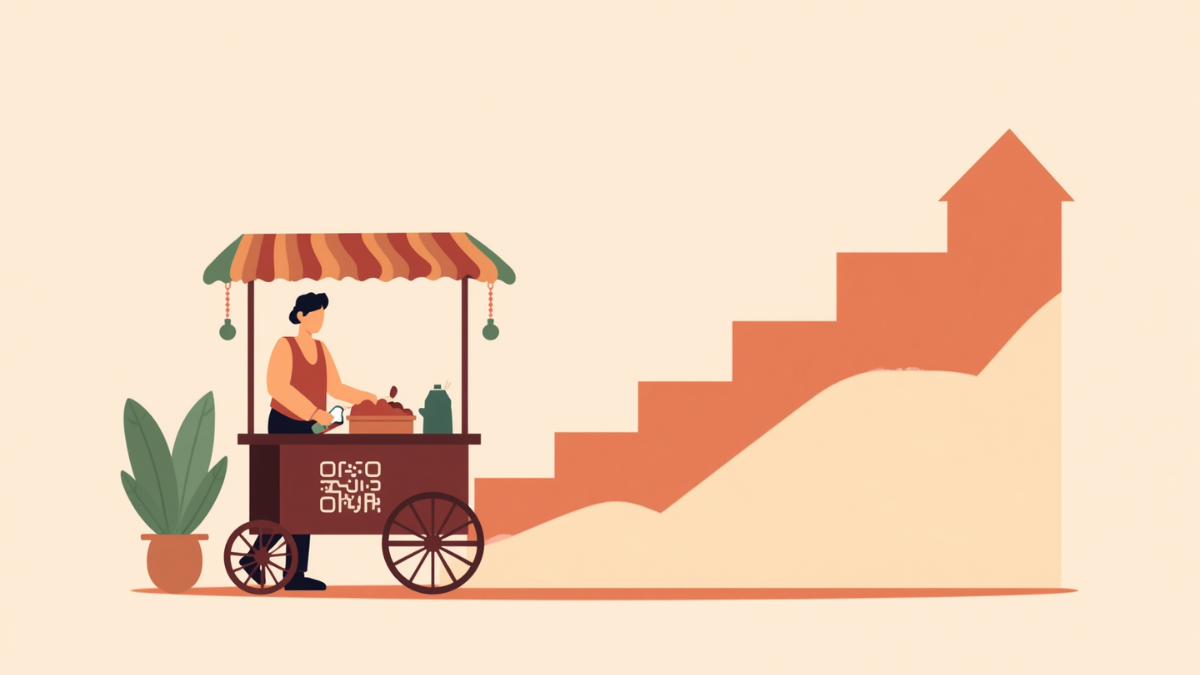
This progression is the real design behind the scheme: it’s not just about the money; it’s about bringing vendors into the formal financial system, step by step.
How the Loan Tiers Work
The scheme works through three loan cycles, each one unlocked by successfully repaying the one before it.
Your first loan, Cycle 1, gives you working capital of up to ₹10,000, repayable over 12 months in monthly installments. Some lenders now offer slightly enhanced first-cycle amounts, up to ₹15,000, depending on current bank-level guidelines, so check with your specific lender.
Once you repay Cycle 1 on time, you become eligible for Cycle 2, worth up to ₹20,000, repayable over 18 months.
After successfully repaying Cycle 2, you become eligible for Cycle 3, worth up to ₹50,000, repayable over 36 months.
Each cycle is entirely collateral-free. The loan amount is disbursed directly into your bank account, typically within 7 to 15 working days of approval.
Key Details at a Glance
| Detail | Amount / Criteria |
|---|---|
| Cycle 1 loan | Up to ₹10,000 (some banks now offer up to ₹15,000) |
| Cycle 2 loan | Up to ₹20,000 (after timely Cycle 1 repayment) |
| Cycle 3 loan | Up to ₹50,000 (after timely Cycle 2 repayment) |
| Collateral | Not required at any stage |
| Interest subsidy | 7% per annum, credited quarterly to your account, on timely repayment |
| Digital payment cashback | Up to ₹1,200 per year (roughly ₹100/month) for using UPI or other digital payments |
| Repayment tenure | 12 months (Cycle 1), 18 months (Cycle 2), 36 months (Cycle 3) |
| Credit guarantee | Covered under CGTMSE |
| Who administers it | Ministry of Housing and Urban Affairs, through Urban Local Bodies |
| Newer addition | PM SVANidhi 2.0 includes a RuPay-linked revolving credit card for vendors with a good repayment record |
| Official portal | pmsvanidhi.mohua.gov.in |
Who Qualifies
You can apply for PM SVANidhi if you are an urban street vendor, and you have at least one of the following:
- A Certificate of Vending (CoV) or an ID card issued by your Urban Local Body (ULB).
- A Letter of Recommendation (LoR) from your ULB or Town Vending Committee (TVC), if you were vending at the time of a relevant survey but haven’t yet been issued a formal certificate.
- Proof of vending, in cases where you’re a vendor from a peri-urban or nearby rural area, which the scheme has gradually extended into as well.
The scheme is meant specifically for urban vending, though its coverage has grown over time to include peri-urban and census town vendors too.
What You Can Use the Loan For
The loan is meant to serve as working capital, the money you use to keep your day-to-day business running. This includes buying inventory or raw materials, purchasing small equipment like a cart or a griddle, or simply restarting vending activity after a disruption.
It isn’t meant for large capital investment like buying property, and it’s a much smaller loan by design than schemes like MUDRA or PMEGP, since it’s built for the specific rhythm of daily vending income.
The Interest Subsidy and Digital Cashback, Explained
Two features make this loan genuinely cheaper than it looks on paper.
- First, the 7% annual interest subsidy. If you repay on time, this subsidy is credited directly into your bank account every quarter. In effect, this brings your real cost of borrowing down close to zero, since the subsidy offsets most or all of the interest you’re charged.
- Second, the digital payment cashback. If you use UPI or other digital payment modes for your vending transactions, you can earn up to ₹100 a month, or roughly ₹1,200 a year, as cashback. This is designed to nudge vendors toward digital record-keeping, which in turn builds the kind of transaction history that makes future loans, both under this scheme and elsewhere, easier to get approved.
The PM SVANidhi Credit Card
Under PM SVANidhi 2.0, vendors with a good repayment record can also get a RuPay-linked credit card.
This works as a revolving credit facility, meaning your available credit limit refreshes as you repay, typically starting around ₹10,000 and growing with usage and repayment history, up to about ₹30,000.
It comes with an interest-free period of roughly 20 to 50 days, and is free for life with no joining or annual charges.
How to Apply
- Confirm your vendor status. If you don’t already have a Certificate of Vending, check with your Urban Local Body about how to get one, or whether a Letter of Recommendation applies to your situation.
- Apply through the official portal (pmsvanidhi.mohua.gov.in), or visit your nearest Common Service Center (CSC), which can help you fill in the form and upload documents if you’re not comfortable doing this online yourself.
- Submit your KYC documents: your Certificate of Vending or Letter of Recommendation, Aadhaar card, and bank account details.
- Your Urban Local Body verifies your vendor status. The lending bank or MFI then does a basic credit and KYC check.
- Once approved, sign the loan agreement and confirm you understand the repayment schedule and how the interest subsidy works.
- The loan amount is credited directly to your bank account, usually within 7 to 15 working days.
- Make your monthly repayments on time. This is what unlocks your next, larger loan cycle.
Common Mistakes That Delay Approval
- Applying without a Certificate of Vending or Letter of Recommendation. This is the core document that establishes your eligibility. Sort this out with your ULB before applying.
- Not linking a working bank account properly. Since both your loan and your interest subsidy are credited directly to your account, an incorrect or unlinked account causes real payment delays.
- Skipping digital payments. This doesn’t affect your loan eligibility, but it does mean missing out on the cashback, which effectively lowers your cost of running the business.
- Assuming you can skip straight to a higher cycle. You can’t. Cycle 2 and Cycle 3 are only unlocked by successfully repaying the cycle before it.
- Missing repayments without contacting your lender. If you’re struggling to repay, talk to your bank or lending institution early. Missing a payment silently can affect both your interest subsidy eligibility and your progression to the next loan cycle.
Bottom Line
PM SVANidhi is built specifically for street vendors who have never had access to formal credit before.
It starts small, at up to ₹10,000, with no collateral and no credit history required. Repay it on time, and you move up to ₹20,000, then ₹50,000, while also earning a 7% interest subsidy and digital payment cashback along the way.
For a vendor rebuilding after a setback, or starting completely from informal credit, this scheme is often the very first rung on a longer ladder toward formal financial inclusion.
FAQs About PM SVANidhi Loan Scheme
Do I need collateral for a PM SVANidhi loan?
No. All three loan cycles are completely collateral-free.
What if I don’t have a Certificate of Vending yet?
Contact your Urban Local Body. If you were vending at the time of a relevant vendor survey, you may be eligible for a Letter of Recommendation instead, which also allows you to apply.
How much can I actually save through the interest subsidy?
The 7% annual subsidy, credited quarterly, brings your effective interest cost close to zero if you repay on time. It is credited directly to your bank account and is not automatically applied to your EMI.
Can I skip to Cycle 2 or Cycle 3 directly?
No. Each cycle is unlocked only after you successfully repay the one before it.
What is the digital payment cashback?
Up to ₹100 a month (around ₹1,200 a year) if you actively use UPI or other digital payment methods for your vending transactions.
Is there a PM SVANidhi credit card?
Yes, under PM SVANidhi 2.0. It’s a RuPay-linked revolving credit facility for vendors with a good repayment history, free for life, with no joining or annual fee.
How long does it take to get the loan after approval?
Typically 7 to 15 working days from approval to disbursement.
Is this scheme only for vendors in big cities?
It started that way, but coverage has expanded to peri-urban areas and census towns as well. Check with your local ULB if you’re unsure whether your area is covered.
Is there an application fee?
No. Applying through official channels, or through a Common Service Center, is free.
What happens if I can’t repay on time?
Contact your lending bank or institution as soon as you know you’re struggling, rather than missing payments silently. This protects both your interest subsidy eligibility and your path to the next loan cycle.
Related Schemes
PMEGP — margin-money subsidy for a new manufacturing or service unit. Mudra Yojana (PMMY) — collateral-free loans up to ₹20 lakh. Stand-Up India — loans for women and SC/ST entrepreneurs. Browse all scheme guides
Last verified: July 2026. Information compiled from the official PM SVANidhi portal (pmsvanidhi.mohua.gov.in), Ministry of Housing and Urban Affairs updates, and participating bank scheme pages. This is independent informational content, not affiliated with the Government of India. Loan cycle amounts, interest subsidy terms, and cashback details are revised periodically — always confirm current figures with your Urban Local Body or lending bank before applying.